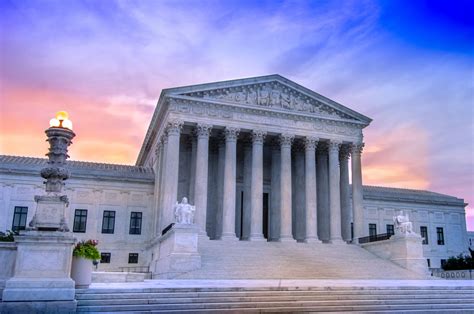
When the Supreme Court of the United States (SCOTUS) vacates a District Court order, it nullifies or sets aside the lower court’s decision, effectively rendering it void. This action typically occurs during the appellate process when SCOTUS reviews a case and determines that the District Court’s ruling contains legal errors, procedural issues, or other deficiencies that warrant reversal or reconsideration. Below is a detailed explanation of when and why SCOTUS vacates a District Court order, the legal mechanisms involved, and the broader implications, with specific relevance to contexts like immigration law (given the prior discussion on illegal border crossing).
What Does “Vacate” Mean?
To vacate a District Court order means SCOTUS declares the decision legally invalid. Unlike affirming (upholding) or reversing (overturning with a new ruling), vacating often leaves the case unresolved and may return it to the lower court for further proceedings consistent with SCOTUS’s guidance. This can occur in whole or in part, depending on the scope of the error identified.
When Does SCOTUS Vacate a District Court Order?
SCOTUS may vacate a District Court order under several circumstances, typically after granting a petition for a writ of certiorari (agreeing to hear the case). The decision to vacate often stems from the following scenarios:
Legal Error in the District Court’s Ruling:
The District Court misapplied or misinterpreted federal law, statutes, or constitutional principles. For example, in immigration cases, a District Court might misinterpret provisions of the Immigration and Nationality Act (INA), such as those governing removal or penalties under 8 U.S.C. § 1325.
Example: If a District Court issues an injunction blocking enforcement of immigration policies (e.g., expedited removal) based on an incorrect reading of statutory authority, SCOTUS may vacate the order if it finds the court exceeded its jurisdiction or misinterpreted the law.
Procedural Irregularities:
The District Court failed to follow proper procedural rules, such as improperly granting a preliminary injunction without sufficient evidence or failing to provide due process.
Example: In Trump v. Hawaii (2018), SCOTUS reversed and remanded lower court orders (including District Court injunctions) that blocked a travel ban, partly because the lower courts did not adequately justify nationwide injunctions.
Mootness or Changed Circumstances:
A case may become moot (no longer a live controversy) due to changes in law, policy, or facts, rendering the District Court’s order irrelevant. SCOTUS may vacate the order to prevent it from having precedential effect.
Example: In Munsingwear vacatur cases (derived from United States v. Munsingwear, Inc., 1950), SCOTUS vacates lower court decisions when a case becomes moot during appeal to avoid leaving potentially erroneous rulings on the books.
Jurisdictional Overreach:
The District Court lacked jurisdiction or exceeded its authority. For instance, District Courts issuing nationwide injunctions in immigration cases (e.g., blocking border policies) may face vacatur if SCOTUS determines the court overstepped its geographic or legal scope.
Example: In United States v. Texas (2023), SCOTUS addressed challenges to immigration enforcement priorities, and related lower court orders were scrutinized for jurisdictional propriety.
Constitutional Violations:
The District Court’s order violates constitutional principles, such as separation of powers or federalism. For example, a District Court order that improperly restricts executive authority in immigration enforcement (e.g., CBP or ICE actions) may be vacated.
Example: In Department of Homeland Security v. Regents of the University of California (2020), SCOTUS vacated lower court orders in part because the District Court’s reasoning on DACA rescission did not fully account for administrative law requirements.
Intervening Legal Developments:
A new SCOTUS precedent, statutory amendment, or regulatory change undermines the District Court’s reasoning. SCOTUS may vacate and remand for reconsideration in light of the new legal framework.
Example: Changes in immigration policy (e.g., reinstatement of “Remain in Mexico”) may prompt SCOTUS to vacate District Court orders that no longer align with current law.
Process of Vacating a District Court Order
Appeal to Circuit Court:
Before reaching SCOTUS, a District Court order is typically appealed to a U.S. Court of Appeals (e.g., the Ninth Circuit for many immigration cases). If the Circuit Court upholds or modifies the order, the losing party may petition SCOTUS for review.
Petition for Certiorari:
A party files a petition for a writ of certiorari, asking SCOTUS to review the case. SCOTUS grants certiorari in cases involving significant legal questions, circuit splits, or national importance (e.g., immigration enforcement disputes).
SCOTUS Review:
SCOTUS reviews briefs, hears oral arguments, and evaluates the District Court’s order (and Circuit Court’s ruling, if applicable). The Court assesses whether the lower court erred in law, procedure, or jurisdiction.
Decision to Vacate:
If SCOTUS finds grounds for vacatur, it issues an opinion or order vacating the District Court’s ruling. The case is often remanded to the District Court or Circuit Court for further proceedings consistent with SCOTUS’s ruling.
In some cases, SCOTUS may issue a GVR order (Grant, Vacate, Remand) without full briefing, directing the lower court to reconsider in light of a recent precedent or development.
Effect of Vacatur:
The District Court’s order is nullified, and the case may be reheard, dismissed, or resolved differently based on SCOTUS’s instructions.
If the order was an injunction (e.g., blocking immigration enforcement), vacatur may allow the government to resume its actions.
Implications of Vacating a District Court Order
Impact on Immigration Law:
In immigration cases, vacating a District Court order can significantly affect enforcement of policies like expedited removal, detention, or penalties under 8 U.S.C. § 1325. For example, vacating an injunction may allow CBP or ICE to resume deportations or border security measures.
Conversely, vacatur may protect immigrant rights if SCOTUS finds a District Court erred in upholding restrictive policies.
Precedential Effect:
Vacating a District Court order prevents it from serving as binding precedent, which is critical in high-stakes areas like immigration where nationwide policies are at issue.
However, SCOTUS’s reasoning in vacating may establish new precedent, influencing future District Court rulings.
Judicial Efficiency:
Vacatur avoids perpetuating erroneous rulings and ensures cases are resolved under correct legal standards.
Remanding allows lower courts to address unresolved issues, such as new evidence or updated laws.
Political and Policy Ramifications:
Immigration cases often involve politically charged issues (e.g., border security, asylum policies). SCOTUS vacating a District Court order can shift the balance between executive authority and judicial oversight, impacting national policy.
Example: Vacating injunctions against Trump-era immigration policies (e.g., border wall funding or “public charge” rules) often restored executive discretion.
Examples in Immigration Context
Jennings v. Rodriguez (2018)**:
A District Court ordered bond hearings for detained immigrants, but SCOTUS vacated and remanded, finding the lower court misinterpreted statutory detention provisions under 8 U.S.C. § 1225 and 1226. The case was sent back for further consideration of constitutional claims.
Biden v. Texas (2022)**:
A District Court issued an injunction requiring reinstatement of the “Remain in Mexico” policy. SCOTUS vacated the injunction, ruling that the District Court erred in mandating policy reinstatement without sufficient legal basis, restoring executive discretion.
Arizona v. United States (2012)**:
While primarily addressing a state law, SCOTUS’s partial vacatur of lower court rulings on Arizona’s SB 1070 clarified federal authority over immigration, affecting District Court orders in related cases.
Broader Context and Considerations
Frequency: SCOTUS vacates District Court orders relatively rarely, as it hears only about 70-80 cases per year out of thousands of petitions. Most vacaturs involve significant legal or national issues, like immigration enforcement or constitutional questions.
Judicial Restraint: SCOTUS may vacate rather than reverse to avoid overstepping its role, allowing lower courts to correct errors while preserving judicial independence.
Nationwide Injunctions: District Courts increasingly issue nationwide injunctions in immigration cases, which SCOTUS often scrutinizes for overreach. Vacatur is common when such injunctions lack sufficient justification.
Munsingwear Vacatur: In cases that become moot, SCOTUS may vacate to prevent “unreviewable” lower court rulings from influencing future cases, a practice relevant to rapidly changing immigration policies.
Conclusion
SCOTUS vacates a District Court order when it identifies legal, procedural, or jurisdictional errors, or when circumstances like mootness or new precedents undermine the ruling. In immigration contexts, such as disputes over 8 U.S.C. § 1325 or civil penalties, vacatur can reshape enforcement, protect executive authority, or safeguard individual rights. The process involves appellate review, certiorari, and often remand, with significant implications for legal precedent, policy, and judicial efficiency. By vacating, SCOTUS ensures the law is applied correctly while maintaining the judiciary’s role in checking governmental power. For specific cases, outcomes depend on SCOTUS’s reasoning and the lower court’s response on remand.



 Swansenreport
Leave a comment