MDLEA OF 1986
Here is a clear, thorough explanation of The Maritime Drug Law Enforcement Act of 1986 (MDLEA) — what it is, why it was created, how it works, why it is controversial, and how it has been applied in real-world cases.
⸻
🌊 What Is the Maritime Drug Law Enforcement Act (MDLEA)?
The Maritime Drug Law Enforcement Act of 1986 is a U.S. federal law that makes it a crime to possess, distribute, or manufacture illegal drugs on the high seas, even when:
•The ship is not U.S.-flagged,
•No one on board is a U.S. citizen,
•The ship is outside U.S. territorial waters,
•The drugs are not bound for the United States,
•And there’s no connection to the U.S. at all.
In simple terms:
👉 The MDLEA allows the U.S. to prosecute foreign nationals, on foreign vessels, in international waters, for drug trafficking anywhere on Earth.
This makes it one of the most expansive extraterritorial criminal statutes in the world.
⸻
📌 Why Was the MDLEA Created?
During the 1980s, the U.S. was ramping up the “War on Drugs.” Drug cartels often used:
•Unregistered (“stateless”) vessels
•Remote shipping routes
•International waters (outside any nation’s jurisdiction)
Because no country had clear jurisdiction in international waters, traffickers exploited gaps in maritime law.
Congress responded in 1986 by passing the MDLEA, giving the U.S. Coast Guard broad power to intercept and detain drug smuggling vessels regardless of nationality.
The goals were to:
•Close jurisdictional loopholes
•Disrupt transnational trafficking networks
•Give the Coast Guard global interdiction authority
⸻
⚖️ Key Legal Powers Under the MDLEA
Here’s what the law allows:
1. Extraterritorial jurisdiction
The U.S. can prosecute anyone, anywhere on Earth, if drugs are found aboard a vessel that is:
•Stateless / no valid registration
•A vessel registered in a country that consents to U.S. enforcement
•A vessel subject to U.S. jurisdiction due to bilateral maritime agreements
This is so broad that even people who never intended to enter U.S. waters can be prosecuted.
⸻
2. Coast Guard authority to board and search vessels
The Coast Guard can stop, board, search, and seize vessels in:
•U.S. waters
•Foreign territorial waters (with permission)
•International waters without permission if the ship is stateless
They can also detain the crew and transport them to the U.S. for prosecution.
⸻
3. No requirement of a connection to the United States
Unlike most criminal statutes:
•The government does not need to prove the drugs were bound for the U.S.
•The defendants do not need to have any U.S. contacts or intentions
•Simply being on a suspect vessel is enough for prosecution
This feature is what makes the MDLEA controversial.
⸻
🚨 Typical MDLEA Prosecutions
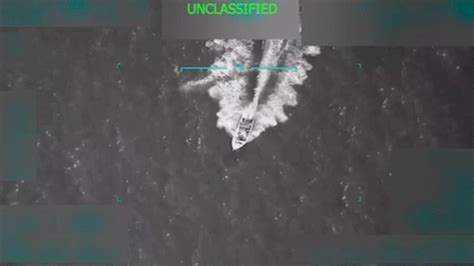
Most MDLEA cases involve:
•Small fishing boats or semi-submersibles
•Crews from Latin America or the Caribbean
•Cocaine shipments headed to Central America for onward trafficking
Crews often consist of impoverished fishermen hired by cartels. They are frequently charged with conspiracy to distribute narcotics, which carries mandatory minimum sentences of 10 years to life.
Courts have routinely upheld sentences even when:
•Defendants never touched U.S. soil before arrest
•They were low-level crew members
•They had no role in planning or profiting from trafficking
⸻
❗ Controversies & Criticisms
The MDLEA is one of the most contested federal criminal statutes, with criticisms from legal scholars, human-rights groups, and even some federal judges.
1. Extraterritorial overreach
Critics argue the law violates:
•International law
•The U.S. Constitution’s limits on congressional power
Since many crew members have no U.S. connection, prosecutors rely on Congress’s authority to “define and punish felonies on the high seas.” Some judges have questioned whether the MDLEA goes too far.
⸻
2. Stateless-vessel designation
Sometimes the Coast Guard designates a vessel “stateless” when:
•The crew cannot produce papers
•The claimed nationality cannot be verified immediately
This allows the U.S. to assume jurisdiction — but critics say this process can be abused or improperly executed.
⸻
3. Harsh sentences for low-level workers
Many defendants are:
•Poor fishermen
•Uninvolved in cartel leadership
•Unaware of the full scope of the smuggling operation
Yet they receive long mandatory sentences because MDLEA prosecutions treat all conspirators equally.
⸻
4. No jury need consider U.S. nexus
Defendants are not allowed to argue:
•“I had nothing to do with the United States.”
•“The drugs were not bound for the U.S.”
Courts consistently rule that these facts are irrelevant under the statute.
⸻
5. Lack of transparency
Interdicted individuals often:
•Are detained secretly on Coast Guard cutters
•Spend weeks at sea without legal rights
•Are eventually flown to U.S. courts without public record of their treatment
This has led to accusations of due process violations.
⸻
📜 Key Court Rulings on the MDLEA
Federal courts have heard many challenges; almost all uphold the law.
U.S. v. Suerte (11th Cir.)
Held that prosecuting foreign nationals with no U.S. nexus is constitutional.
U.S. v. Bellaizac-Hurtado (11th Cir.)
One of the rare cases limiting MDLEA:
•Court said Congress cannot use “Define and Punish Clause” to regulate drug trafficking inside another country’s territorial waters.
U.S. v. Davila-Reyes (1st Cir.)
A major ongoing case:
•Court initially ruled the MDLEA’s stateless-vessel provision conflicted with international law.
•A later en banc decision reversed much of that reasoning, but debate continues.
⸻
🌍 Impact on Global Drug Enforcement
The MDLEA forms the backbone of:
•U.S.–Colombia anti-narcotics maritime cooperation
•Caribbean drug-interdiction operations
•U.S. Coast Guard authority in the Eastern Pacific and Caribbean Sea
Today, most U.S. cocaine seizures take place at sea under this law, not on land.
⸻
🔥 In Summary
The Maritime Drug Law Enforcement Act of 1986:
✔ Grants sweeping global jurisdiction
✔ Allows U.S. prosecution of anyone on a drug-smuggling vessel
✔ Requires no U.S. nexus
✔ Has enabled major interdiction successes
✔ But raises constitutional, human-rights, and international-law concerns
It is one of the most powerful and controversial tools in U.S. anti-narcotics policy.


 Swansenreport
Leave a comment