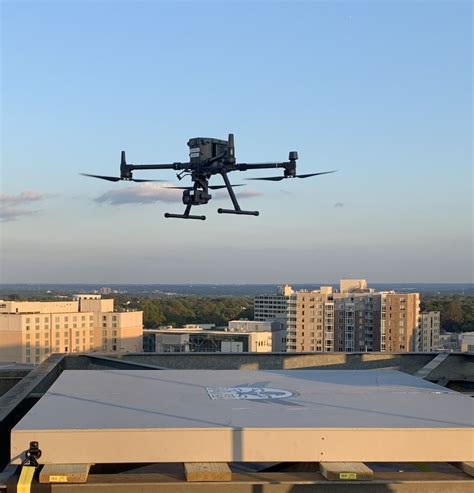
DFR is an emerging public safety technology program where drones are launched immediately to emergency scenes to provide real-time aerial footage and data to first responders National League of Cities. Rather than waiting for officers or emergency personnel to arrive and manually deploy drones, strategically placed drone dock stations house ready-to-launch drones that can be deployed within seconds Positively Osceola.
How DFR Works
When a 911 call comes in, a remote pilot at a command center launches a drone from the nearest dock station. The program is designed to fly drones beyond visual line of sight, reaching scenes in under two minutes and providing real-time footage to officers and supervisors Paladindrones. The drone streams live video to dispatchers, responding units, and command staff before ground personnel arrive, giving them critical situational awareness about the number of people involved, potential hazards, suspect locations, and overall scene conditions.
The Denver Police Department reports that over 80% of the time, the drone is the first to arrive at the scene CBS News, and has been deployed to robberies, burglaries, assaults, weapons-related offenses, and other emergency calls.
The Good Outcomes
Enhanced Safety: First responders can assess dangerous situations before putting themselves at risk, identifying whether suspects are armed or determining safe approach routes.
Faster Response: The program has helped find suspects, clear calls that don’t need an officer, and reduce service wait times CBS News, allowing departments to allocate limited resources more effectively.
Better Decision-Making: Real-time aerial intelligence helps officers determine conditions before arriving, such as fire severity, number of victims, or escape routes suspects might take.
Search and Rescue: Drones equipped with thermal cameras can locate missing persons in search-and-rescue operations, especially in remote areas or during natural disasters National League of Cities.
Resource Efficiency: In an era of staffing shortages and budget constraints, DFR enables agencies to cover more ground without additional personnel. Denver’s program is described as a zero-dollar program CBS News in terms of initial costs.
Community Benefits: Programs like St. Cloud’s publish online dashboards showing where drones have been deployed, promoting transparency.
The Bad Outcomes and Concerns
Privacy and Surveillance Fears: The acquisition sparked privacy concerns, especially in minority neighborhoods worried about increased surveillance and over-policing Police1. Critics worry about mission creep—where drones initially deployed for emergencies gradually become tools for general surveillance.
High Initial Costs: While some vendors offer no-cost pilots, St. Cloud’s investment is projected to be $890,000 over five years Positively Osceola. Smaller agencies struggle to find funding for drones, docking stations, command software, and training.
Technical Limitations: Drones have limited battery life (typically 20-40 minutes), are affected by severe weather, and require dense station placement to provide adequate coverage. GPS interference or technical failures could leave responders without crucial intelligence.
Data Security and Misuse: The collection of high-resolution video raises questions about who can access footage, how long it’s retained, and whether it could be misused. Lexington had an officer access body-worn camera footage he was not authorized to view Police1, highlighting potential for similar misuse with drone footage.
Accountability Gaps: Officials say policies regulating drone use will be written once a vendor is selected Police1, meaning some programs launch before clear rules exist about when drones can be deployed, who can view footage, and what oversight mechanisms exist.
Equity Concerns: There’s concern about whether drone coverage will be distributed equitably or concentrated in already over-policed communities.
Current Adoption
DFR programs are rapidly expanding nationwide. Chula Vista, California pioneered the concept in 2018, and major cities like Los Angeles, Denver, and St. Cloud, Florida have recently launched programs. The technology represents a significant shift in emergency response philosophy, though its long-term impact on privacy, policing practices, and community relations remains to be seen.




 Swansenreport
Leave a comment