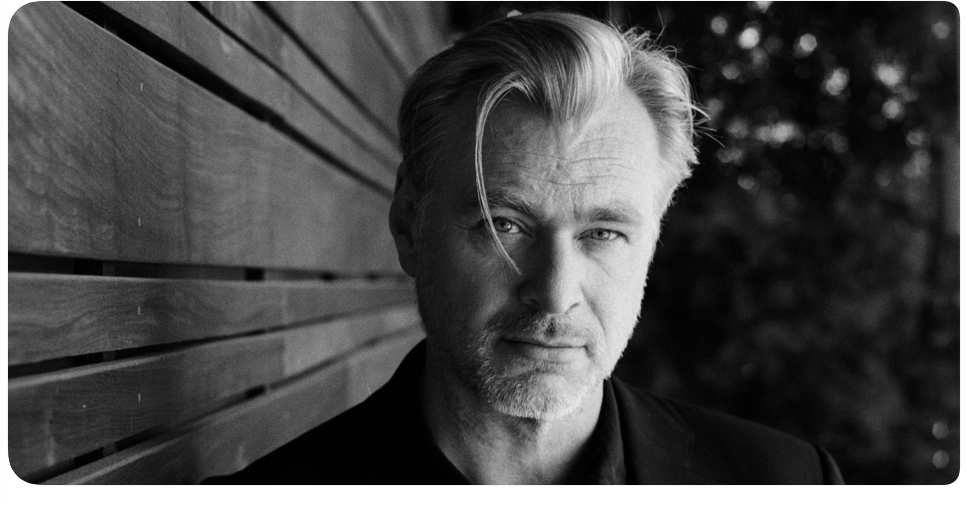
Christopher Nolan has long been fascinated by how the mind constructs reality—especially the blurred boundary between dreams and waking consciousness. His most direct exploration of lucid dreaming appears in the film Inception(2010), but the theme appears throughout his work (e.g., Memento, The Prestige, Tenet), all of which deal with perception, memory, and subjective reality.
What lucid dreaming is
Lucid dreaming occurs when a person becomes aware they are dreaming while still inside the dream and sometimes gains partial or full control over events. Scientifically, lucid dreaming is associated with:
-
heightened activity in the prefrontal cortex (self-awareness and reasoning),
-
REM sleep brain states,
-
the ability to manipulate dream environments (flying, changing scenery, interacting intentionally).
Nolan did not invent these ideas—psychologists had studied lucid dreaming for decades—but he translated the phenomenon into a cinematic operational system that audiences could easily understand.
Nolan’s interpretation in
Inception
Nolan’s film takes lucid dreaming concepts and expands them into a structured theoretical framework:
1. Shared dreaming
Instead of one person controlling a dream, Nolan imagines technology enabling multiple people to enter the same dream, effectively creating a shared subconscious environment.
2. Dream architecture
In lucid dreaming, dreamers sometimes reshape their surroundings unconsciously. Nolan converts this into the idea of trained “architects” who design dream worlds beforehand, reflecting how lucid dreamers can sometimes consciously manipulate dream landscapes.
3. Dream stability and awareness
Lucid dreams can collapse when the dreamer becomes too aware. In Inception, this becomes the concept of “dream instability” when the subconscious realizes something is wrong and “defenses” appear.
4. Time dilation
Dream research shows subjective time perception can differ from waking time. Nolan dramatizes this into nested dream levels, where time moves progressively slower at deeper levels.
5. Totems and reality testing
Lucid dreamers often use reality checks (looking at clocks, reading text twice, etc.) to determine whether they are dreaming. Nolan transforms this into the famous totem concept—objects that behave differently in dreams than in reality.
Nolan’s broader philosophical interest
Nolan’s fascination is less about sleep science and more about a deeper philosophical question:
If subjective perception defines reality, how certain can we ever be that we are awake?
This connects lucid dreaming to recurring Nolan themes:
-
Memory as unreliable reconstruction (Memento)
-
Identity shaped by perception (The Prestige)
-
Time as psychologically elastic (Interstellar, Tenet)
-
Reality dependent on observer awareness (Inception)
In other words, lucid dreaming is a storytelling metaphor Nolan uses to explore the instability of human certainty.
Influence on culture and science interest
After Inception, public interest in lucid dreaming surged:
-
search volume and academic outreach programs on lucid dreaming increased,
-
many sleep researchers reported a spike in public participation in lucid-dream studies,
-
reality-check techniques and dream-journaling became widely popularized outside psychology communities.
Nolan effectively made a niche sleep-science topic part of mainstream conversation.
Key takeaway
For Nolan, lucid dreaming is not merely a sleep phenomenon—it is a cinematic and philosophical tool that allows him to ask one of his central questions:
If our minds construct our experienced reality, how do we know when that construction is real?



 Swansenreport
Leave a comment