Operation Northwoods
What It Was
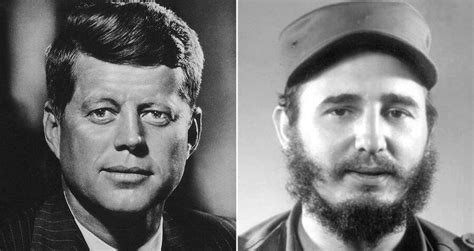
Operation Northwoods was a series of proposals drafted in 1962 by the Joint Chiefs of Staff and presented to Secretary of Defense Robert McNamara. The documents outlined a covert plan to create false flag operations — staged terrorist attacks and acts of violence — that would be blamed on Cuba, thereby manufacturing a pretext for a U.S. military invasion of the island and the removal of Fidel Castro.
The proposals were signed by General Lyman Lemnitzer, Chairman of the Joint Chiefs, and submitted to McNamara on March 13, 1962. President Kennedy rejected the plan outright, and Lemnitzer was subsequently removed as Chairman and reassigned to NATO. The documents remained classified for decades, finally coming to light through the Assassination Records Review Board in 1997 and later detailed by journalist James Bamford in his 2001 book Body of Secrets.
What Was Actually Proposed
The document was breathtaking in its scope and moral audacity. Among the specific proposals:
- Sinking or attacking U.S. Navy vessels and blaming Cuba, explicitly invoking the USS Maine as a historical template.
- Shooting down or remotely hijacking a U.S. passenger aircraft, with suggestions ranging from using a drone aircraft to actually killing American civilians aboard a real flight.
- Staging terrorist bombings in Miami and Washington D.C., including bombings in Cuban exile neighborhoods to generate sympathy and outrage.
- Creating a fake Cuban aerial attack on U.S. aircraft during the John Glenn orbital mission, which could be used as a casus belli if the mission failed.
- Faking a Cuban military attack on the U.S. Naval base at Guantanamo Bay, including staging mock funerals for “victims.”
- Orchestrating a wave of violent terrorism in American cities, timed to build public support for military action.
- Developing a “Remember the Maine” propaganda campaign to capitalize on manufactured outrage.
The language of the documents was chillingly bureaucratic — the kind of sterile, procedural prose that makes monstrous things sound like logistics problems.
Why It Matters
Operation Northwoods is historically significant on several levels:
1. It Actually Happened This was not a conspiracy theory. It was a formally drafted, signed, and submitted proposal by the highest military command in the United States. It exists on paper, with signatures. The men who signed it were not fringe actors — they were the leadership of the most powerful military in the world.
2. It Proves Institutional Willingness The proposals demonstrate that at the highest levels of the U.S. government and military, there existed a genuine willingness to kill American citizens and destroy American property as a political tool. The limiting factor was not conscience — it was Kennedy’s refusal.
3. The Cuba Context Post-Bay of Pigs, the pressure to dislodge Castro was immense. The CIA’s Operation Mongoose was already running covert operations, and there was genuine institutional paranoia about a communist foothold ninety miles off the Florida coast. Northwoods was the most extreme expression of that desperation.
4. The False Flag Template The document reads as essentially a how-to manual for manufacturing consent for war — something that gives historians and critics of government a documented reference point when discussing the mechanics of how populations are manipulated into supporting military action.
5. Its Relationship to JFK Kennedy’s rejection of Northwoods, combined with his post-Cuban Missile Crisis turn toward back-channel diplomacy with the Soviets and his increasing friction with the Joint Chiefs and CIA, has long been a centerpiece of serious scholarship examining his assassination. Researchers note that Lemnitzer and others had profound contempt for Kennedy’s leadership. Whether that connects to Dallas is disputed — but the animosity was real and documented.
The Deeper Implication
What Operation Northwoods ultimately reveals is the existence of what might be called the operational imagination of power — the set of actions that institutions are willing to contemplate when sufficiently motivated. The moral and legal barriers that most citizens assume protect them are, in this light, revealed to be contingent on the character and resolve of whoever sits at the top of the chain of command.
Kennedy said no. Someone else might not have.
That is perhaps the most unsettling sentence one can write about the whole affair — not that it was proposed, but that its failure was entirely dependent on one man’s decency on one particular afternoon in 1962.


 Swansenreport
Leave a comment