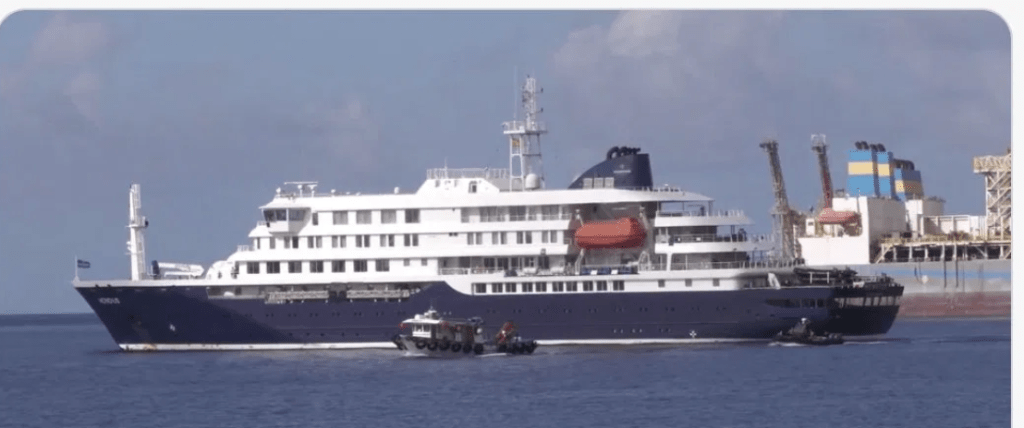
Hantavirus Cruise Ship Passengers Arrive in Nebraska for Quarantine; Two in Biocontainment at Emory
Eighteen American passengers from the cruise ship at the center of a deadly hantavirus outbreak arrived in the United States early Monday morning, with one confirmed positive case placed in a specialized biocontainment unit at the University of Nebraska Medical Center in Omaha — and two more transported to a similar facility at Emory University in Atlanta.
The outbreak originated aboard the MV Hondius, a Dutch expedition cruise ship that departed Ushuaia, Argentina on April 1. A passenger died from hantavirus on April 11; his body was removed in Saint Helena, where his wife also disembarked and died two days later in a Johannesburg hospital. A third passenger died on board. The CDC has classified the outbreak as a Level 3 emergency response. TMZ
The 18 Americans landed at Offutt Air Force Base near Omaha in the early morning hours Monday. One passenger who tested positive for hantavirus but had no symptoms was taken directly to the biocontainment unit at the University of Nebraska Medical Center. The remaining passengers went to the center’s National Quarantine Unit for assessment and monitoring. Washington Times
The distinction between the two facilities matters. The quarantine unit functions more like a specialized hotel — passengers have their own rooms, access to technology and exercise equipment, but cannot intermingle or receive outside visitors. The biocontainment unit is a full hospital environment, equipped for patients who may deteriorate rapidly. Its current capacity is two to three beds. The National Desk
Two additional passengers — a couple, one of whom is experiencing mild symptoms — were transported to a biocontainment unit at Emory University in Atlanta. A French woman also tested positive Monday; French health officials confirmed her case and repatriated five French passengers to Paris. The total confirmed and suspected case count has reached at least ten, including the three fatalities. CNN
CDC Acting Director Dr. Jay Bhattacharya said seven Americans who left the cruise earlier had already been back in the U.S. for roughly two weeks, had returned to several different states, and none had shown symptoms. They are being monitored. Washington Times
Dr. Angela Hewlett, medical director of the Nebraska Biocontainment Unit, said she “highly encourages” all passengers to remain at the facility for a prolonged period — up to 42 days — even those not required to do so, citing the unit’s on-site testing capability and the ability to provide immediate care if a patient deteriorates rapidly. UPI
The Andes strain of hantavirus is of particular concern to public health officials because, unlike most hantavirus variants, it can spread from person to person — a characteristic that sets it apart from the more common North American strains and is central to why the CDC has treated this as a high-priority response.
Sources: NPR | CBS News | CNN | The Hill | Wikipedia — MV Hondius outbreak






Leave a Reply