Rubio Faces Pointed Questioning on Iran War Strategy as Wisconsin Gas Prices Climb
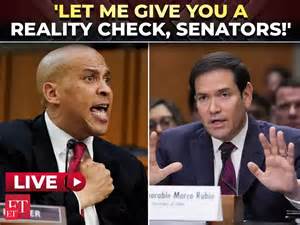
Secretary of State Marco Rubio appeared before the Senate Foreign Relations Committee Tuesday morning — his first congressional testimony since the United States launched military operations against Iran on February 28 — and spent much of the hearing on defense against Democratic arguments that the administration had handed Tehran political and financial leverage it didn’t have before the war began.
The hearing comes as American and Iranian negotiators work to finalize a memorandum of understanding that would extend the current ceasefire by 60 days. Under the preliminary framework, Iran would reopen the Strait of Hormuz, the United States would facilitate the release of frozen Iranian assets, and both sides would begin formal talks on Iran’s nuclear program and sanctions relief. Rubio told lawmakers a deal could come “today, tomorrow, or next week,” but acknowledged there is no guarantee the terms will be acceptable to the Senate or the American public. AL-Monitor
The sharpest exchange came between Rubio and Sen. Cory Booker (D-NJ), who made a straightforward argument: that the Trump administration has allowed Iran to profit from sanctioned oil sales to China, and is now negotiating a nuclear framework that is structurally identical to the Obama-era deal that Rubio and Trump spent years denouncing. Booker laid out how the U.S. had allowed Iran to sell an estimated $10 billion in sanctioned oil to China, then offered further sanctions relief in exchange for Iran releasing highly enriched uranium and committing to limit enrichment capacity — terms Booker said were the exact deal the Trump administration had vilified under President Obama. The implicit accusation was that Rubio was defending, in practice, a policy he had built his foreign policy reputation attacking in principle. The New Republic
Rubio’s response was combative but not fully responsive to Booker’s core point. He disputed the revenue figures, argued Iran is now losing hundreds of millions of dollars per day due to the Strait blockade, and insisted Tehran is the one begging for a deal — not Washington. He told the committee that reopening the Strait remains the central demand of any agreement, and that Iran must declare the waterway open, stop charging a toll, help clear mines, and pledge not to fire on commercial vessels. What he did not directly address was the underlying contradiction Booker raised: that the administration once argued allowing Iran to sell oil to China and receive sanctions relief was a catastrophic concession, and appears now to be offering precisely that. CNBC
The hearing comes as a small but growing faction of Republicans has joined Democrats in questioning the war’s economic consequences and open-ended price tag ahead of midterm elections in the fall. Iranian state media reported Tuesday morning that Tehran and Washington had stopped exchanging messages with mediators days earlier — a claim the Trump administration disputed. PBSCNBC
The dispute in the hearing room is not abstract for people in northern Wisconsin. Since the Strait closure in March, national gas prices peaked at $4.55 per gallon in late May — roughly 54 percent higher than the $2.96 per gallon average before the conflict began. Wisconsin’s average had climbed to $4.48 per gallon by late May, up $1.51 from the same period a year ago. GasBuddy analyst Patrick De Haan warned in late April that even after the Strait reopens, it could take as long as six months for oil inventories to return to normal levels — meaning relief at the pump, if it comes, will be slow. The Energy Information Administration projected in May that the average retail price for gasoline will be $3.88 for all of 2026 — up sharply from the $2.91 average the agency had forecast before the war started. Finder + 3
A note on the revenue figures: the $10 billion and $50 billion numbers circulating in social media clips of Tuesday’s exchange reflect different time windows and are not directly comparable. Congressional research from mid-2025 estimated Iran’s petroleum sales at roughly $53–54 billion annually in 2023 and 2024, with more than 90 percent going to China — figures that predate both the war and the tighter sanctions the administration has pursued since. Booker’s $10 billion figure appears to reference a narrower window of sales since hostilities began. Neither number was sourced to verified real-time data during the exchange itself, but Booker’s structural argument — that this administration is offering Iran the same basic bargain it once said was unconscionable — held up through the hearing without a direct rebuttal from Rubio. house
Sources: Senate Foreign Relations Committee hearing, June 2, 2026 — Al-Monitor; CNBC; PBS NewsHour; New Republic; Raw Story; WSAW (Stevens Point); Wausau Pilot & Review; FactCheck.org/EIA Short-Term Energy Outlook, May 2026; House Select Committee on China (Krishnamoorthi letter, Aug. 19, 2025)




Leave a Reply