Corporate America spent the last 18 months telling shareholders it was going all-in on artificial intelligence. Now the credit card statements are arriving, and the numbers don’t match the pitch deck.
Call it the enterprise AI reckoning.
In the span of a few weeks, a cascade of stories has surfaced showing some of the biggest names in tech burning through annual AI budgets in months, employees gaming internal leaderboards by running AI agents in idle loops to juice their productivity scores, and a mystery company torching a reported $500 million on Claude licenses in a single month because nobody thought to set a spending limit.
The tools, it turns out, worked. That’s the problem.
Uber burns a year’s budget by April
Uber deployed Anthropic’s Claude Code to roughly 5,000 engineers in December 2025. By February, usage had doubled. By April, the company had blown through its entire 2026 AI coding budget. Monthly API costs per engineer were running between $500 and $2,000. About 70% of code being committed company-wide was AI-generated. An internal AI agent was handling 1,800 code changes per week with no human in the loop.
Those are adoption numbers that would have made a great slide at a tech conference six months ago.
Uber COO Andrew Macdonald isn’t celebrating. In a recent podcast interview, he said the link between Claude Code usage and actually shipping useful products to consumers isn’t there yet. “It’s very hard to draw a line between one of those stats and, ‘Okay, now we’re actually producing 25% more useful consumer features,’” he said. The company has since capped per-engineer spending at $1,500 a month per tool.
Microsoft quietly cancels the licenses
Microsoft — which has $13 billion invested in OpenAI and writes roughly 30% of its own code using generative AI — has started canceling most internal Claude Code licenses across its Experiences and Devices division, the team behind Windows, Microsoft 365, Outlook, Teams, and Surface. The deadline for the cutover is June 30. Engineers are being redirected to GitHub Copilot CLI, Microsoft’s own command-line coding tool.
The internal memo from EVP Rajesh Jha framed it as a strategic move toward tools the company can shape directly. Analysts read it differently. The problem wasn’t that Claude Code underperformed. It was that engineers loved it, used it constantly, and the constant use made the math unsustainable at scale.
Meta’s “Claudeonomics” and the tokenmaxxing trap
This is where it gets strange.
Last November, Meta told employees that demonstrating “AI-driven impact” would be a core performance expectation in 2026, tied to bonuses. The message was clear: use AI, or explain why you didn’t.
Someone built a leaderboard. An employee-created internal dashboard called “Claudeonomics” — named after Anthropic’s Claude — began ranking Meta’s top 250 token consumers, awarding titles like “Token Legend” and “Cache Wizard.” It became a competition.
Meta employees collectively burned through 73.7 trillion tokens in a single 30-day stretch. Some employees, aware that their leaderboard ranking could influence layoff decisions, gamed the system by running AI agents idle for hours — consuming tokens while producing nothing. The practice has a name in Silicon Valley now: tokenmaxxing.
Meta CTO Andrew Bosworth eventually pushed back in an internal memo. “Nobody should be using AI tools just for the sake of using them,” he wrote. “All motion is not progress and token usage alone is not a measure of impact of any kind.”
The leaderboard came down in April after it leaked to the press. Meta is now building a centralized monitoring platform called “AI Gateway” and steering employees toward its own in-house MetaCode assistant instead of third-party tools.
The $500 million mystery
The most spectacular example of enterprise AI cost dysfunction doesn’t even have a name attached to it. An AI consultant told Axios that one of their clients spent half a billion dollars on Claude licenses in a single month. The reason: no usage limits were set on employee access. Workers could — and did — use AI tools for anything, including, one executive told Axios, checking the weather.
A pattern, not a coincidence
Amazon shut down its own internal AI usage leaderboard after employees began performing unnecessary tasks to inflate their scores. ServiceNow exhausted its full-year Anthropic budget within the first months of 2026. Gartner now predicts that 25% of planned 2026 AI budgets will slip into 2027 as corporate proofs of concept fail to clear procurement review — and that only 28% of AI infrastructure projects fully deliver on their stated business case.
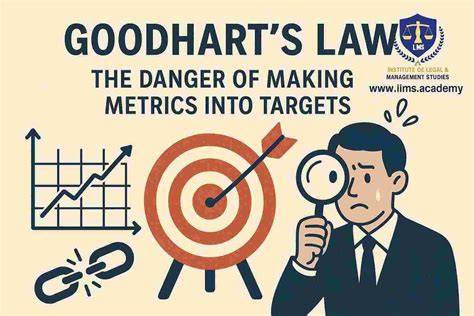
The dynamic has a name in social science. Goodhart’s Law holds that when a measure becomes a target, it ceases to be a good measure. The moment companies started telling employees to rack up AI usage stats, they stopped measuring AI productivity and started measuring competitive anxiety.
The era of deploying unlimited AI licenses and seeing what happens appears to be ending. What’s replacing it is governance, usage caps, ROI audits, and the hard question that was always lurking beneath the hype: what, exactly, did we get for all of this?
Nobody has a clean answer yet.
Sources: Fortune, Axios, The Verge, The Information, AI Weekly, Inc., Fast Company






Leave a Reply