
No developer has filed a single application. Not in Bayfield County, not in Ashland County. And yet last week, both county boards spent real time — public comment, presentations, pointed questions — on a technology that, as far as anyone in the room could confirm, isn’t actually coming.
That’s not as strange as it sounds.
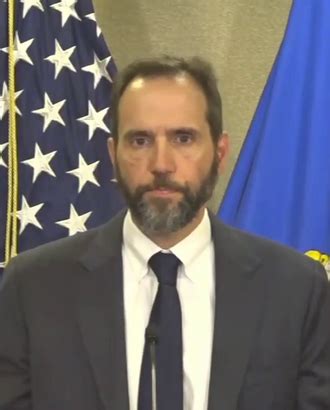
Karl Green, a community planning specialist with the UW-Madison Division of Extension, ran informational sessions at the Northern Great Lakes Visitor Center and before both county boards. His message, boiled down: your zoning code probably wasn’t written with data centers in mind, and that’s a problem worth fixing before someone shows up with a permit application, not after.
“These are the reasons that it makes sense to take a step, a little bit of a break to better understand what your moratorium allows and what you can do,” Green told the Bayfield County Board.
That word — moratorium — is doing a lot of work in Wisconsin right now. Dane County adopted an 18-month pause on hyperscale data center permits in June. Manitowoc County did something similar the month before. Superior passed a one-year moratorium in its city council. Brown County, notably, looked at the same question and passed — its board declined to move forward, citing existing zoning tools. So this isn’t a fringe idea making the rounds in rural Wisconsin. It’s become a fairly standard first move, adopted by some counties and rejected by others, depending on what officials think they already have in place.
Bayfield County hasn’t done either. Not yet. What happened last week was a public comment period ahead of the board session, where several residents spoke in favor of a moratorium — and then Green’s presentation, laying out what that tool actually does and doesn’t do.
It does not ban anything. Green was clear on that point, more than once. A moratorium buys time — 12 to 18 months, typically — to study a specific type of development and update local ordinances around it. It cannot be used, he said, as a backdoor way of prohibiting something outright. “Specifically it is 12 to 18 months. It can’t be a ‘we are not going to allow this.’”
What it can do is give a county room to catch up. Green pointed to gaps that exist right now in local code — battery storage systems tied to data center operations, for instance, which can raise safety questions that current zoning may not address at all. Noise limits, backup power handling, setbacks, screening, water quality — all things Green said belong in a serious zoning update, along with something counties don’t always think to ask about upfront: what happens to the site when the data center closes. Reclamation, in other words. The same question mining regulation has wrestled with for decades, now showing up in a very different context.
Then there’s scale, which Green said gets lost in most public conversation about this. “The term data center is like fish,” he said. “Are you talking about minnows, are you talking about muskies?” A small facility and a hyperscale campus have almost nothing in common beyond the name — and it’s the hyperscale end, the 1,200-acre, hundred-megawatt-plus category, that’s driving most of the anxiety nationally. Those projects need serious grid capacity and heavy fiber infrastructure to function, which narrows where they can realistically go. Green’s read: if one lands here, it’s going to follow the power lines and the fiber routes, not show up at random.
Water was the other subject that kept coming up, and it’s worth sitting with for a second. The worry isn’t water use in the abstract — it’s evaporative cooling, specifically, pulling large volumes from a source and losing it permanently rather than returning it. Green raised aquifers in particular, which can take years to recharge once drawn down. He offered the Vantage Data Centers campus near Port Washington as a counterexample: that facility buys its water from the city’s municipal supply, sourced from Lake Michigan, rather than drawing from a well or aquifer directly. Different water source, different set of risks. That distinction — where the water actually comes from — is likely to matter a great deal if a project is ever proposed here.
Green’s closing point is the one worth remembering longest. Most of what residents have heard about data centers, he said, comes from somewhere else — Georgia, Virginia, wherever the last viral story originated. And those cases may simply not translate. Without an actual developer and an actual proposal on the table, there’s no project to evaluate, no water-use figure to check, no energy footprint to measure. Everything else is speculation, informed or not.
Which is precisely the position both counties are in today. No application. No proposal. No site. What they do have is a runway — the industry is expanding fast enough, and Wisconsin’s fiber and power infrastructure is developed enough in patches, that a developer’s knock isn’t unthinkable. Whether Bayfield or Ashland counties use that runway to update outdated zoning language, consider a moratorium of their own, or simply keep watching how Dane, Manitowoc, and Brown counties’ differing approaches play out — that’s the decision now sitting with each county board.
Sources:
- Olivo, Rick. “Are northern Wisconsin counties ready for data centers?” Ashland Daily Press, Aug. 6, 2026.
- WisPolitics. “Dane County joins growing number of communities with data center moratoriums,” June 2026.
- Wisconsin Public Radio. “Superior joins growing number of Wisconsin communities to pass data center moratorium,” June 17, 2026.
- APG of Wisconsin/The Center Square. “Another Wisconsin county considers data center moratorium,” June 2026.
- Dane County press release, “Dane County Board Introduces Moratorium on Data Center Applications,” May 26, 2026.


Leave a comment