Those Cameras Watching Your Car Everywhere You Drive? Here’s What Flock Safety Is Actually Doing With the Data
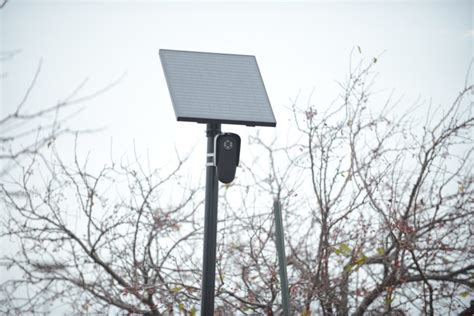
If you’ve noticed small white cameras mounted on poles at intersections around Wisconsin — or really anywhere in America — there’s a good chance they’re made by a company called Flock Safety. And a California resident’s viral city council testimony is sparking a national conversation about what those cameras actually are, what they collect, and who can access it.
Flock Safety cameras are in more than 5,000 communities and connected to more than 4,800 law enforcement agencies across 49 states. The company claims its cameras conduct more than 20 billion license plate reads per month. The cameras capture the license plate, location, time, and vehicle description of every car that passes — not just vehicles connected to crimes. Racine County Eye
The system doesn’t just store data locally. Flock pulls all that information into its own centralized cloud servers, creating a national network that allows any subscribing law enforcement agency to search license plate hits from cameras across the country. The ACLU has documented that the company is now planning to plug its systems into commercial data brokers — allowing police to “jump from LPR to person” using people-lookup services, turning a plate number into a full identity profile. The Daily Beast
The data is also being accessed by federal immigration authorities. Documents obtained by news outlet 404 Media show local police officers conducting Flock searches on behalf of ICE, effectively allowing federal agents to sidestep sanctuary laws by routing requests through local departments. The ACLU of Colorado documented more than 1,400 ICE-related searches in Denver’s Flock audit logs since June 2024 alone. Just The News
A class action lawsuit filed in California in April 2026 alleges Flock illegally shared license plate data with out-of-state law enforcement agencies, violating California privacy law. Public records in San Jose show Flock audit logs listing search reasons including “fresno dea intel,” “CBP,” and “ICE” — suggesting federal agencies were accessing data through local police accounts. Wisconsin Right Now
The debate has a strong Wisconsin dimension. Green Bay’s police chief defended the city’s 42 Flock cameras this week, saying access requires a documented public safety reason and data is deleted after 30 days. But in both Appleton and Oshkosh, privacy concerns led to the termination of Flock contracts. WXPR
Flock disputes the most serious characterizations. The company says it does not have a contractual relationship with ICE, has banned federal authorities from directly asking agencies to share camera data, and says it is “explicitly impossible” in Illinois to share data with federal agencies for immigration purposes. It also says it does not use facial recognition. Whether those assurances hold up as the company expands its data broker integrations and AI-powered video search capabilities remains an open question. Urban Milwaukee
The bipartisan concern here is worth noting. While many of the cities ending Flock contracts are Democratic-leaning, a growing number of conservative lawmakers are also pushing back — citing the same fundamental objection: a private company is building a nationwide movement database of law-abiding citizens, transmitting it to a corporate cloud, and making it available to anyone with a law enforcement login. FOX6 News Milwaukee
Sources: NPR | WBAY Green Bay | ACLU | Stateline | ABC7 Chicago | Class Action Lawsuit | MRSC — WA State Law





Leave a Reply