Someone Born in the Year 2154 Was Approved for Unemployment Benefits. The New Labor Secretary Is Done with It.
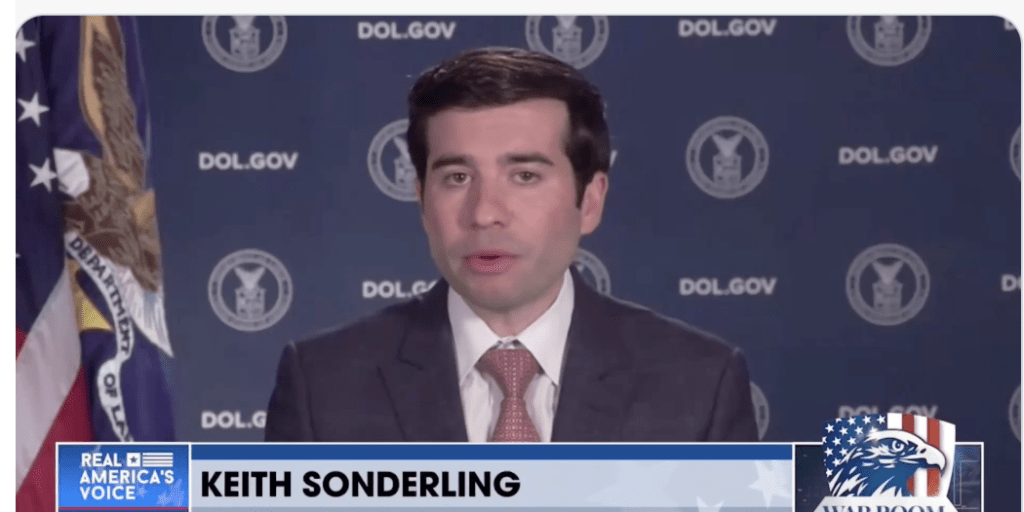
Acting Labor Secretary Keith Sonderling has a way of making the scale of pandemic-era unemployment fraud tangible: he tells Congress about the person born in the year 2154 who was approved for unemployment insurance. Not flagged. Not rejected. Approved.
Sonderling, who took over as acting secretary last month after Lori Chavez-DeRemer resigned amid a misconduct investigation, testified before the Senate Appropriations Subcommittee on Labor last week, laying out the scope of the fraud problem his department inherited. The 2154 birth date was one of many implausible data points that slipped through the system during the COVID-19 pandemic, when states were overwhelmed with claims and basic verification was stripped away in the name of speed. Yahoo!
The broader figures from DOGE’s earlier audit put the 2154 case in context: 24,500 purported claimants over 115 years old collected $46 million; 28,000 claimants listed as toddlers between ages one and five collected $198 million. Total improper and potentially fraudulent pandemic-era unemployment payments are estimated at hundreds of billions of dollars nationwide. The Daily Caller
Sonderling is asking Congress for a budget boost to strengthen identity verification systems, and has launched unemployment.gov — a pilot program designed to get states to share claims data with the federal government before payments go out rather than after. “Unemployment insurance systems nationwide face significant financial and performance failures,” he said. “For too long, these problems have gone unchallenged. That ends now.” AOL
The Department of Labor has also formalized a new partnership between its program offices and its Inspector General, embedding OIG investigators directly into the Employment and Training Administration’s anti-fraud strike teams. “We’re taking a proactive approach by working directly with the strike teams — providing data and analytical capabilities and placing investigators at the front lines where the threat begins,” the OIG said in a joint announcement with Sonderling’s office earlier this month. Oduu
One important nuance: the Labor Department itself has acknowledged that some “implausible” birth dates in the system were actually placeholder entries created by state agencies to flag already-identified fraudulent claims for tracking purposes — meaning the 2154 claim may have been a flagged record rather than an undetected fraud. Either way, the underlying reality it represents — hundreds of billions of dollars in pandemic-era unemployment paid without adequate identity verification — is thoroughly documented and not in dispute.
Sources: DOL Official Press Release | FedScoop — Senate Testimony | IBTimes — DOGE Findings




Leave a comment