What Are Flock Cameras, and Why Are People So Worried About Them?
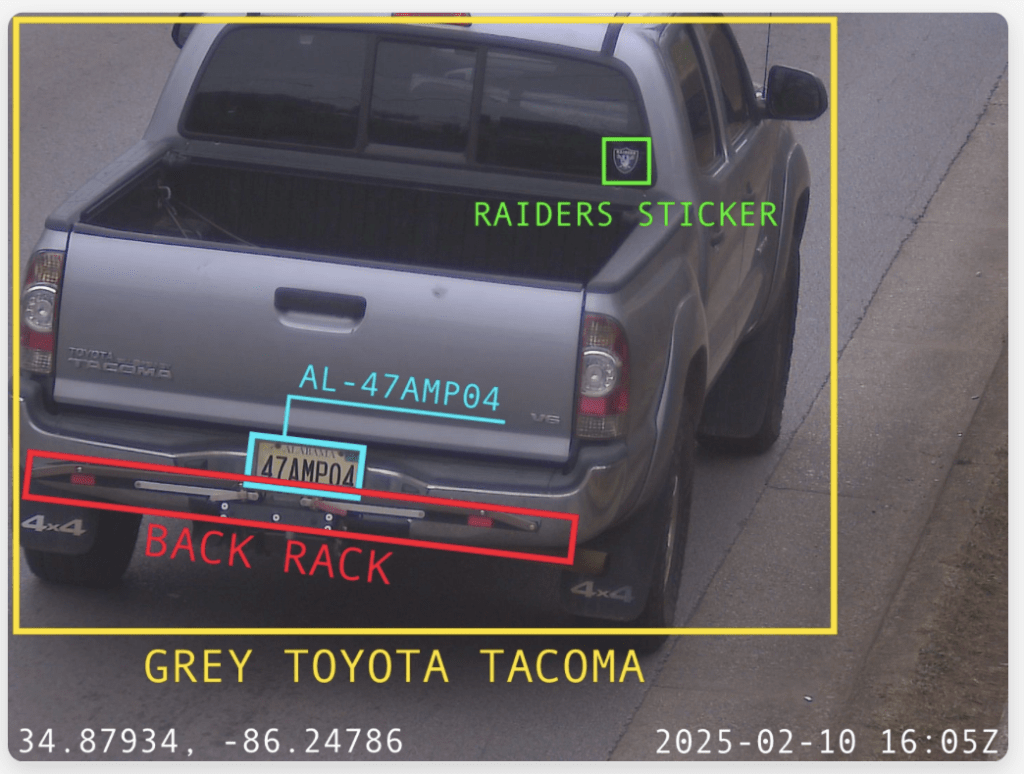
If you’ve driven Highway 13 or Highway 2 in Bayfield County lately, you may have passed one without knowing it — a small, solar-powered camera mounted on a pole, pointed at the road behind you. It photographed your license plate. It noted your car’s make, model, and color. It logged the time, the location, and any identifying details it could capture — a bumper sticker, a missing hubcap, a roof rack. Then it stored that image and sent it to a database.
Welcome to the world of Flock Safety.
Automated license plate readers have expanded rapidly across the country. One popular vendor — Flock Safety — boasts that over 5,000 law enforcement agencies and more than 6,000 communities now use their technology. Flock operates more than 40,000 ALPR cameras across the United States, using artificial intelligence to constantly record the plates, color, and make of passing vehicles. The cameras can also register unique features like missing hubcaps. By Flock’s own count, its cameras conduct more than 20 billion license plate reads per month. Governing + 2
That is an enormous amount of data about the movements of ordinary Americans who have done nothing wrong.
What the cameras actually do
Flock cameras are not traffic cameras in the traditional sense. They are not primarily watching for red-light runners or speeders. The cameras record license plates, vehicle color, make, model, and details like stickers or bike racks — and that data feeds into a searchable law enforcement database. When a plate associated with a stolen car or an outstanding warrant drives past, the system flags it. Police departments cite this as a genuine public safety tool, and it is. The cameras have been used to recover stolen vehicles, locate missing persons, and identify suspects in serious crimes. KQED
Flock says its data is automatically deleted after 30 days by default, that data sharing is off by default, and that every search is permanently logged in an immutable audit trail. The company does not use facial recognition. Those are meaningful guardrails — on paper. Home for All
The problem is what happened when the paper met reality.
The “National Lookup” problem
The core of the public’s apprehension isn’t what Flock cameras do locally. It’s what happens when those cameras are networked together across thousands of jurisdictions — and who gets access to that network.
Flock’s “National Lookup” tool enabled out-of-state and federal agencies to search license plate data across state lines, circumventing legal restrictions in states that had specifically prohibited such sharing. Public records obtained through freedom of information requests revealed that local and state police searched ALPR camera data more than 4,000 times for immigration-related reasons between June 2024 and May 2025 — despite state laws in Illinois and elsewhere explicitly prohibiting the use of ALPR data for immigration enforcement. YelpWestside Current
In Bend, Oregon, the scale of the problem was documented in stark detail. Federal immigration officials — including agents from ICE, Customs and Border Protection, and Homeland Security Investigations — accessed the Bend Police Department’s Flock camera database 279 times in June 2025, during just the first three weeks of what was supposed to be a year-long program. The city shut the cameras down after discovering what had happened. FOX 11 Los Angeles
Richmond, California had a similar experience. The city’s police chief discovered that federal agencies had access to the data collected through a back-end “National Lookup” feature enabled by Flock Safety — inconsistent with city and state law. He directed that the cameras be disabled, and they have remained disabled ever since. FOX 11 Los Angeles
The abortion case that changed the conversation
Nothing crystallized the public’s concern more than what happened in Texas in the spring of 2025. A sheriff’s office in Johnson County, Texas searched data from more than 83,000 automated license plate reader cameras — spanning 6,809 different Flock networks, including states where abortion access is protected by law, such as Washington and Illinois — to track a woman suspected of self-managing an abortion. The stated reason logged in the search record was direct: “had an abortion, search for female.” PatchVenicenc
The sheriff initially said the search was a missing-person welfare check. Court records later obtained by the Electronic Frontier Foundation showed that police were conducting a “death investigation” and had discussed whether they could charge the woman with a crime. Flock said she was never charged. But the search had already happened. Eighty-three thousand cameras had already been queried — in states whose own laws were supposed to prevent exactly that kind of cross-border surveillance. Venicenc
The Electronic Frontier Foundation put it plainly: the systems built to track stolen cars and issue parking tickets have become tools to enforce the most personal and politically charged laws in the country. Patch
The pushback
The reaction has been swift in many communities. At least 30 localities — including Flagstaff, Arizona; Cambridge, Massachusetts; Eugene, Oregon; and Santa Cruz, California — have either deactivated their Flock cameras or canceled their contracts since the beginning of 2025. Citizens have taken matters into their own hands as well. Protesters have dismantled Flock cameras in at least five states, often following public outcry. CAYelp
Congress has taken notice. Ranking members of the House Oversight Committee launched a formal investigation into Flock’s role in “enabling invasive surveillance practices that threaten the privacy, safety, and civil liberties of women, immigrants, and other vulnerable Americans.” CNBC
Flock has responded with a series of changes. The company removed all federal organizations from statewide and national lookup networks and says federal agencies can no longer access those search tools. The company also announced features to block impermissible searches, require that all searches include a logged reason, and implement AI-driven audit alerts to flag suspicious activity. caaol
Flock’s spokesperson told Stateline that the company does not have a contractual relationship with ICE, that sharing with federal agencies is disabled by default, and that communities remain in control of their own data. She pointed to high-profile solved cases as evidence the technology works as intended. Edhat
Critics aren’t satisfied. The American Civil Liberties Union says Flock Safety’s cameras are giving even the smallest-town police chief access to an enormously powerful surveillance tool — and that the data continues to find its way to ICE regardless of the company’s stated policies. Edhat
What it means here
Bayfield County sits along two of the most traveled corridors in the region. Highway 13 and Highway 2 are not high-crime thoroughfares. They are the routes people use to get to work, to the lake, to the grocery store, to the doctor. The question the Dane County story raises — and the question residents along the South Shore should be asking — is not just whether Flock cameras reduce crime. It’s who has access to the data those cameras collect, under what rules, for how long, and whether those rules will hold when federal agencies come asking.
Those are not paranoid questions. They are questions that dozens of communities across the country asked too late.
Sources: NPR, February 19, 2026 (https://www.npr.org/2026/02/17/nx-s1-5612825/flock-contracts-canceled-immigration-survillance-concerns); Electronic Frontier Foundation, May 30, 2025 and October 7, 2025 (https://www.eff.org/deeplinks/2025/05/she-got-abortion-so-texas-cop-used-83000-cameras-track-her-down); Courthouse News Service, February 27, 2026 (https://www.courthousenews.com/california-drivers-accuse-flock-safety-of-sharing-data-with-federal-and-out-of-state-agencies/); Stateline, January 8, 2026 (https://stateline.org/2026/01/08/worried-about-surveillance-states-enact-privacy-laws-and-restrict-license-plate-readers/); The Bend Source, May 7, 2026 (https://www.bendsource.com/news/localnews/federal-immigration-officials-made-279-queries-into-bends-flock-safety-data-in-its-first-three-weeks/); Local News Matters (Richmond, CA), March 18, 2026 (https://localnewsmatters.org/2026/03/18/richmond-flock-contract-extension-privacy-debate/); MRSC, April 27, 2026 (https://mrsc.org/stay-informed/mrsc-insight/april-2026/restrictions-flock-cameras); Flock Safety blog (https://www.flocksafety.com/blog/does-flock-share-data-with-ice); Rep. Krishnamoorthi press release, August 7, 2025 (https://krishnamoorthi.house.gov/media/press-releases/ranking-members-krishnamoorthi-and-garcia-demand-accountability-flock-group)




Leave a Reply