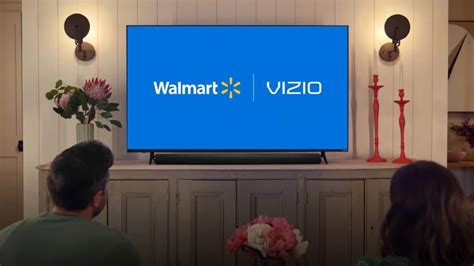
Something’s been circulating on social media this week about Walmart selling you a TV that “watches everything you do and reports it back to their $6.4 billion advertising machine.” The framing is a little breathless, but the underlying story is real — and worth understanding clearly.
Here’s what’s actually happening.
The deal
Walmart completed its $2.3 billion acquisition of Vizio in December 2024. The stated rationale wasn’t a love of flat-screen televisions. It was the SmartCast operating system and the data it collects. Specifically: automatic content recognition, or ACR — technology embedded in the TV that continuously identifies what’s on screen by fingerprinting audio and video, then reports that back to a central database.
“The operating system is key because it is in the home and collects the ACR data that tells you what people are watching but also what they do on their TV,” Kenneth Suh, chief strategy officer at ad tech firm Nexxen, told the Path to Purchase Institute when the deal was announced. “It’s not just I watch the Super Bowl — it’s that I actually play casual games on my TV.”
Vizio had been doing this for years through its Inscape subsidiary, selling that data to advertisers, ratings firms, and media buyers. Walmart just bought the whole operation.
What Walmart does with it
The point of the acquisition is Walmart Connect, the company’s advertising business, which grew 37% in 2025 to reach $6.4 billion in annual revenue. The pitch to brands: Walmart knows what you buy at the store. Vizio knows what you watch at home. Combined, they can track the full loop — you see an ad for laundry detergent on your TV Tuesday night, you buy it at Walmart Wednesday morning, and the advertiser gets confirmation it worked.
In ad industry terms, this is called “closed-loop attribution.” In plain English, it’s a surveillance system that connects your living room to your shopping cart.
The opt-out that isn’t quite an opt-out
Here’s the part worth reading carefully. Vizio’s own privacy policy, updated this spring, says you can opt out of having your viewing data connected to your Walmart account. But buried in the fine print: “Limited disclosure of VIZIO OS Data may continue whether this setting is ON or OFF, such as for aggregate audience measurement, aggregate reporting on ad performance, or pseudonymized target audience groups.”
In other words, some data flows regardless of your settings.
A few things the viral posts got wrong
The claim that the TV “won’t turn on” until you submit to surveillance oversimplifies it. You’re prompted to create or link a Walmart account at setup — but Vizio required a Vizio account before Walmart ever got involved. Smart TVs from Samsung, LG, and Roku do the same. This is standard practice across the industry, which is itself a reasonable thing to be alarmed about.
The more accurate criticism isn’t that Walmart invented this. It’s that Walmart — with its unmatched purchase data on tens of millions of American households — now owns the pipes that connect what you watch to what you buy, at a scale no pure tech company can match.
Wisconsin has no law covering this
Residents of California, Colorado, Connecticut, and more than a dozen other states have comprehensive consumer data privacy laws on the books. Wisconsin does not.
The state legislature has tried. Assembly Bill 172 and its Senate companion SB 166 would have given Wisconsin consumers the right to know what data companies collect about them, the right to correct or delete it, and the right to stop it from being sold to third parties. The Assembly held a public hearing on AB 172 in January 2026. The bill never made it to a floor vote. It failed to pass when the legislative session ended in March.
Consumer advocates weren’t entirely sorry to see it die in that form. The ACLU of Wisconsin said the bill “would legitimize a status quo that protects big tech profits, and not people.” Consumer Reports joined a coalition of organizations in February asking for substantial amendments, including meaningful data minimization provisions the bill lacked.
So the current situation in Wisconsin: no law, a failed bill that advocates called too weak anyway, and a $6.4 billion surveillance apparatus now operating in millions of living rooms — including plenty in this part of the state.
The bottom line
The social media framing is designed to shock. The reality is more mundane and in some ways more troubling: this is legal, technically disclosed, and growing fast. The $6.4 billion number is real. The data loop is real. The opt-out gap in the privacy policy is real. And Wisconsin consumers have no state law to fall back on.
If you own a Vizio TV and a Walmart account and haven’t thought about what you’ve connected, now is a reasonable time to check your settings at vizio.com/account.
Sources: Walmart FY2025 Earnings Presentation (SEC); Boing Boing, March 30, 2026; Vizio Privacy Policy, March 2026; Walmart Consumer Privacy Notice, March 2026; Path to Purchase Institute, January 2025; Deadline, December 3, 2024; TV Technology, February 20, 2024; Wisconsin Legislature AB 172/SB 166 bill text; ACLU of Wisconsin, February 2026; Consumer Reports coalition letter, February 4, 2026





Leave a Reply