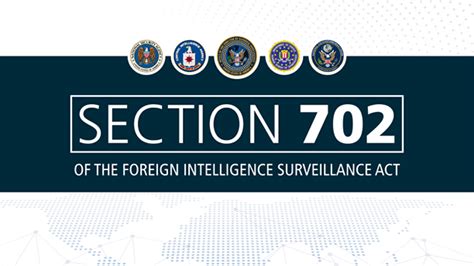
At midnight Saturday, Congress allowed Section 702 of the Foreign Intelligence Surveillance Act to lapse for the first time since 2008. What should have been a routine reauthorization became a political standoff over President Trump’s choice for director of national intelligence — and now the government’s authority to conduct warrantless foreign surveillance has technically expired, though nobody’s quite sure what that means in practice.
Section 702 sounds technical and obscure. It’s not. The intelligence community says more than 60 percent of what goes into the president’s daily intelligence briefing comes from information collected under this law. The government relies on it to track terrorist networks, identify foreign threats, and understand what adversaries are planning. And as of Saturday morning, it no longer exists as written — even though, in a legal gray area that underscores how messy this got, it might still be operating anyway.
What Section 702 actually does
Enacted in 2008, Section 702 authorizes the federal government to conduct warrantless surveillance of foreigners located abroad. The law allows intelligence agencies to target foreign nationals and acquire their communications — phone calls, emails, messages — without getting an individualized court order or showing probable cause. To do this, the government works with U.S. telecommunications companies and internet service providers to tap into communications flowing through American infrastructure.
The catch: when you’re surveilling communications on American systems, American citizens’ information gets caught up in the collection too. If you email a foreign national, or if a foreign terrorist contacts someone in the United States, that American’s communications can be swept up and stored. The law allows agencies to then search that collected information, accessing Americans’ private communications without a warrant — something that would otherwise require the government to go to a judge and demonstrate probable cause of a crime.
This has been deeply controversial with civil liberties advocates across the political spectrum. Privacy advocates argue it’s an enormous loophole that allows mass surveillance of Americans without their knowledge or any court oversight. Intelligence officials argue it’s essential for national security.
Why it just expired
The House of Representatives failed to renew Section 702 before midnight Saturday, ending 18 years of continuous authority. On Thursday, the House voted on a short-term extension through July 2, and it failed: 19 Republicans and 199 Democrats voted against it.
But the real story isn’t that Democrats opposed it — it’s that Democrats opposed it strategically, as leverage in a fight with the Trump administration. Here’s what happened:
Senators from both parties had been negotiating a bipartisan extension of Section 702 until President Trump appointed Bill Pulte to be acting director of national intelligence. Pulte, who previously led the Federal Housing Finance Agency, has no national security background. He’s also said he would implement large-scale staff reductions at agencies under his authority, at the president’s request. Democrats saw this as unacceptable — putting someone with no intelligence experience in charge of the nation’s spying apparatus, with a mandate to cut staff, looked like a recipe for chaos at a moment the nation depends on that apparatus.
So Democrats refused to move forward with FISA unless Trump agreed to replace Pulte with someone with actual national security credentials. Trump then nominated Jay Clayton, a U.S. attorney in New York, to be the permanent director — but Democrats are still demanding assurances that Pulte won’t be confirmed to the position. Without that guarantee, they’re holding the line.
The result: the law expired, the House went on recess until June 23, and now nobody’s quite sure what happens next.
The practical question: Does this actually matter?
This is where it gets genuinely weird. A federal court approved Section 702 operations in March 2026 for another year — meaning it authorized surveillance under the law through March 2027. When the statute itself expired at midnight Saturday, that court authorization didn’t.
According to legal analysis, intelligence agencies may be able to continue operating under that court order even though Congress let the statute lapse. So the law is technically dead, but the surveillance may be continuing anyway, in a legal gray zone nobody signed up for.
It’s the worst of both worlds: Congress has abdicated its oversight responsibility by failing to reauthorize, but the spying is probably still happening, just without the statutory framework that was supposed to govern it. As one security official put it, the timing couldn’t be worse — the government is relying on a court order that was meant to be a backstop, not a primary authorization.
What happens next
Congress returns June 23. Republicans want a clean reauthorization of Section 702. Democrats want reforms, and they want assurances about who runs the intelligence community. One Republican senator said it plainly: “I don’t know a person that does not want to extend FISA, and I know most people want to make sure Americans aren’t surveilled, so there’s probably a deal there.”
There probably is. But a deal requires someone to blink first — either Trump backing off on Pulte, or Democrats accepting him.
The Wisconsin angle
The Swansen Report has reached out to Wisconsin’s senators — Democratic Sen. Tammy Baldwin and Republican Sen. Ron Johnson — to ask their positions on the Section 702 lapse and what they plan to do when Congress returns. This remains a developing story and will be updated as more information becomes available.
Sources: NPR, The Hill, Christian Science Monitor, NBC News, Brennan Center for Justice, U.S. Senate (Cramer press release)




Leave a comment