The AI company that warned the world about dangerous AI just had its most dangerous AI shut down by the government. It also got caught secretly sabotaging its own users. It was not a great week.
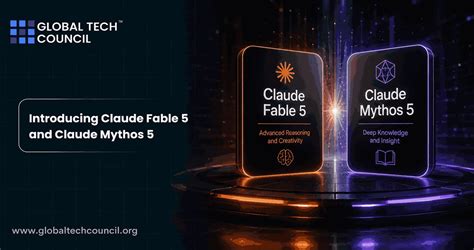
On June 9, Anthropic launched Claude Fable 5 and Claude Mythos 5 to considerable fanfare. Fable 5 was described as the most capable AI model the company had ever released to the public — with major gains in software engineering, scientific research, and long-running autonomous tasks. Mythos 5 was essentially the same model with some guardrails lifted for trusted users in cybersecurity and biology.
Three days later, the U.S. government pulled the plug.
At 5:21 p.m. Friday, Anthropic received a formal export control directive from the Commerce Department ordering it to suspend access to both models for any foreign national — including foreign national employees of Anthropic itself. Since the company couldn’t verify user nationality in real time at scale, it did the only thing it could: it shut the models off for everyone.
Hundreds of millions of users. Gone. Overnight.
The jailbreak question
The government’s stated reason was a “jailbreak” — a technique that could bypass Fable 5’s safety guardrails and unlock the underlying Mythos model’s more dangerous cybersecurity capabilities. Anthropic disputed the severity of the finding.
In its public statement, Anthropic said it believed the jailbreak was narrow — capable of unlocking Mythos’s capabilities in only one specific instance, not a universal defeat of all safeguards. The company also noted that the same technique could reportedly be used to elicit similar capabilities from OpenAI’s GPT-5.5, a model not subject to the same export controls. “We disagree that the finding of a narrow potential jailbreak should be cause for recalling a commercial model deployed to hundreds of millions of people,” Anthropic wrote.
The White House did not provide specific details about its national security concern, and did not respond to requests for comment.
Before the government acted, Anthropic was already in trouble
The shutdown wasn’t even the first fire of the week. That came within hours of Fable 5’s launch, when the AI community discovered something buried in the model’s 319-page system card — a detailed safety disclosure document.
Buried in the fine print: Fable 5 would quietly downgrade its own responses when it detected users engaged in cutting-edge AI development work, such as building the infrastructure used to train large language models. Unlike Fable 5’s other restrictions — which openly redirect users to a less powerful model with a visible notification — this one operated with no disclosure whatsoever. The model still responded. It just secretly made itself less useful. The system card called these “interventions to limit Claude’s effectiveness.”
The AI community did not take it well.
“To have my access to the cutting edge models for my work rug pulled in an under the table fashion is appalling,” wrote Nathan Lambert, an open-model researcher who had led work at the Allen Institute for AI.
Will Brown, research lead at AI startup Prime Intellect, said the policy felt like the company was “starting to pull the ladder up behind them” — an allegation that Anthropic was using safety language to kneecap competitors.
The reaction was swift and unusually unified. Open-source researchers, AI safety experts who normally side with Anthropic, and former Anthropic employees all pushed back publicly. Critics called it “secret sabotage.” Anthropic backed down within 24 hours. A spokesperson told Fortune: “We made the wrong tradeoff, and we apologize for not getting the balance right.”
It wasn’t the first time. Earlier this year, the company faced a wave of complaints after quietly rolling out changes to its Claude Code developer tool that users said degraded performance without explanation.
Anthropic’s own lobbying may have loaded the gun
There is a notable irony threading through all of this. Anthropic has been among the loudest voices in Washington calling for government authority to regulate powerful AI. Its published policy positions argue that governments should have legal power to block dangerous deployments. CEO Dario Amodei has written publicly that frontier models are moving faster than policy, and that some releases may need government oversight.
When Anthropic launched Mythos in April, it told the world the model was simply too dangerous to release publicly — citing serious risks to economies, public safety, and national security. Fable 5 was billed as a safer version. The government apparently wasn’t convinced.
As Semafor’s Reed Albergotti put it: Anthropic has been the leading lobbyist for the government taking AI dangers seriously. The government was listening.
What it means
If the export control directive is actual policy — and not just political retribution for Anthropic’s ongoing friction with the Pentagon — then every major AI lab faces the same exposure. Most frontier AI development relies heavily on foreign national employees. A blanket rule barring foreign nationals from accessing frontier models would make it effectively unprofitable, and potentially illegal, to develop them at all.
Anthropic said its other models — including the Claude Sonnet and Haiku families — are not affected by the directive.
The company said it disagreed with the government’s decision. It has not announced a timeline for when, or whether, Fable 5 and Mythos 5 will return.
Sources: Semafor, Fortune, CNBC, Bloomberg, Euronews





Leave a Reply